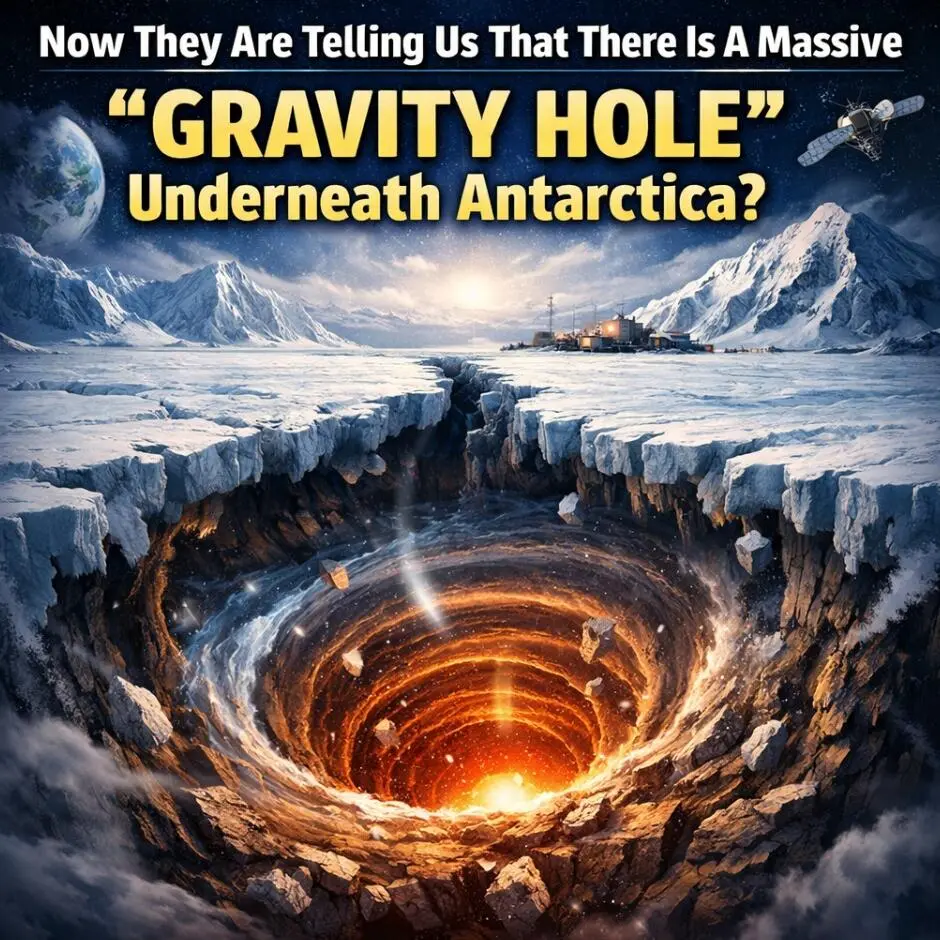
Earth may look like a smooth “blue marble” from space, but it’s better to imagine it as a slightly gnarled orange, with an inside that’s firm in parts, but squishier in others. Since the planet isn’t a perfect sphere and its internal density varies across the globe, gravitational pull changes from place to place. Where there’s less mass in the underlying geology, gravity is weaker, and vice versa.
These dips in the gravitational field are formally known as gravity anomalies, but they’re more commonly called “gravity holes”. The largest is found in the middle of the Indian Ocean, spanning over 3 million square kilometers (roughly 1,100,000 square miles), while the strongest is found in Antarctica.
Up Next
Watching
Latest
-
Scientists find 'the holy grail' of genes that could regrow human limbs
-
4 alien species have been pulled from crashed UFOs, ex-government researcher claims
-
Declassified FBI files claim aliens view humans as the 'lowest' form of life
-
Utility Provider Cutting Electricity for 50k Lake Tahoe Residents to Power AI Data Centers